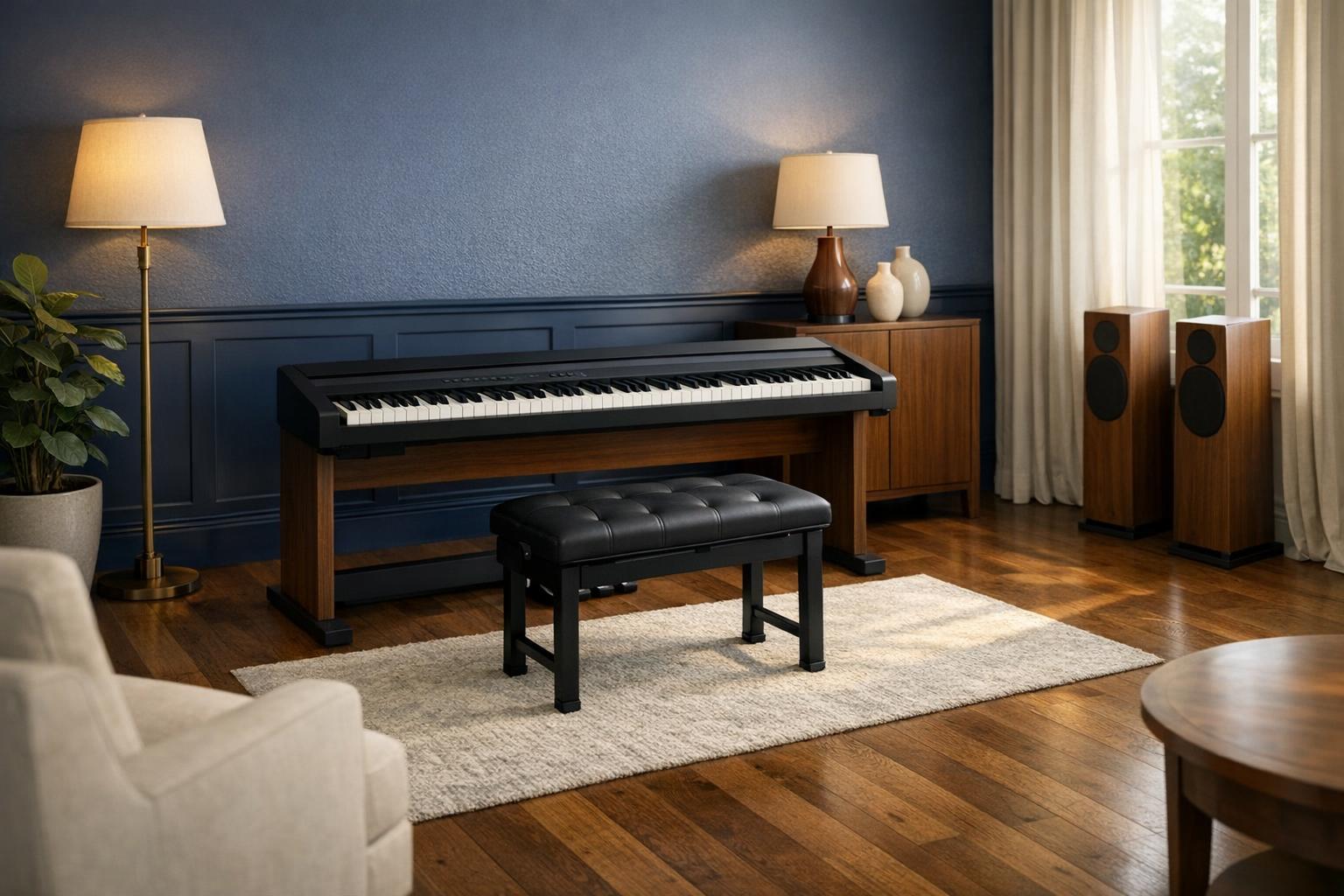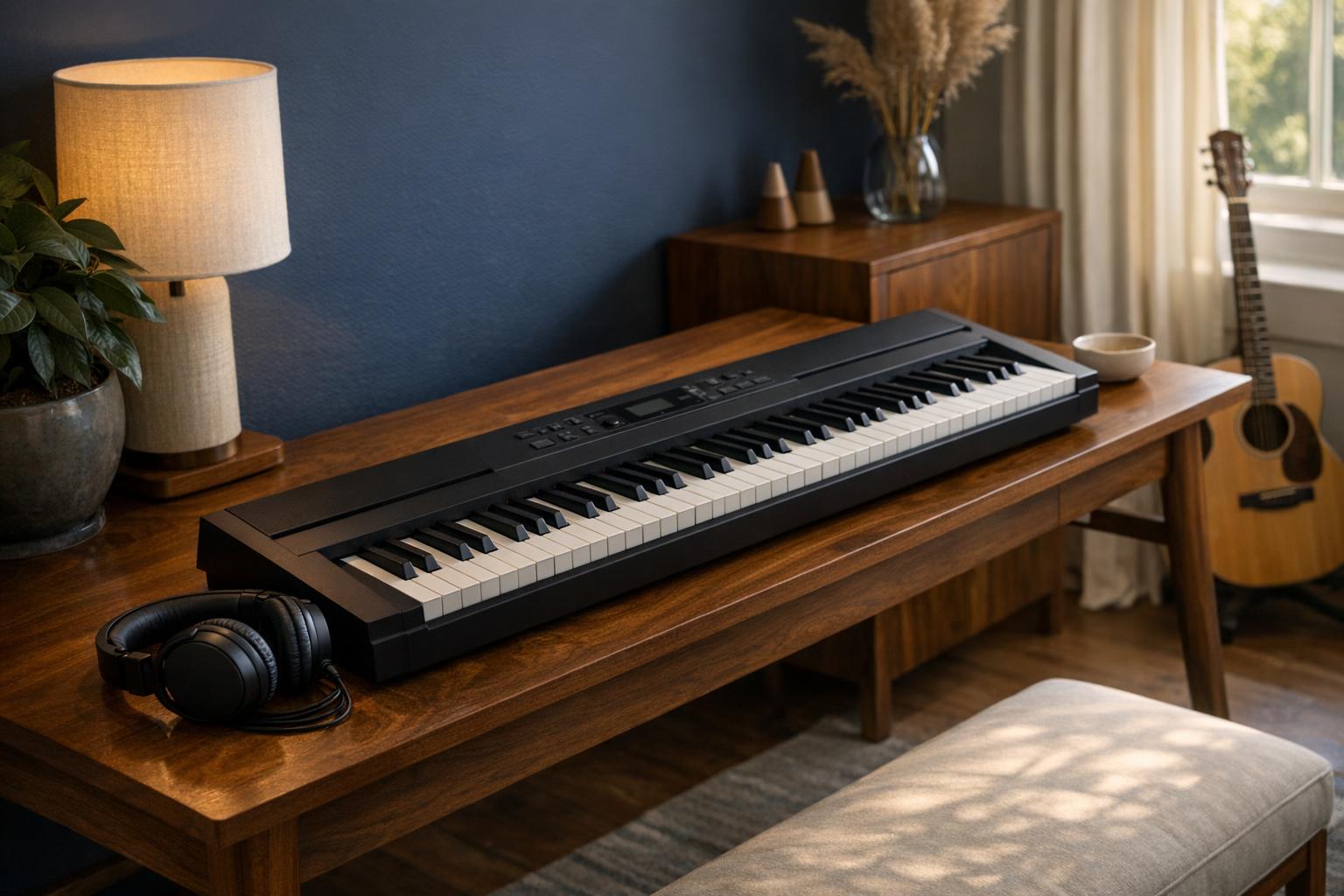
Headphones can change how a digital piano fits into a shared home, but they do not make every aspect of playing silent. The keys and pedals can still produce mechanical sound, and the instrument's speaker behavior depends on its design and settings. Begin with the exact headphone connection and the listening arrangement you need. This guide covers compatibility, cable planning and practical questions for a shared room without promising silent operation, a particular sound quality or any personal benefit from a specific accessory.
Check the socket and speaker behavior
Read the piano manual for the headphone socket type, supported connection and what happens to the speakers when headphones are connected. Do not assume every socket behaves identically or that a line output is intended to drive headphones. If the instrument offers more than one headphone output, confirm how each is described and whether the speaker setting can be changed. A product photograph may show a socket without identifying its intended use.
An adapter can change a plug's physical size, but it does not establish that the underlying connection is suitable. Match the complete signal path rather than buying an adapter solely because its ends fit. Check whether the proposed headphones use a standard wired connection or depend on electronics intended for another device. The most useful starting point is the instrument's own accessory and connection guidance. If the listing says only headphones included, ask for the actual model or specifications when those details matter to the decision.
For the next part of this decision, read Planning Room Space and a Bench for a Digital Piano. Keep the equipment requirement separate from personal preference, and verify the exact selected model before treating related information as evidence for your own configuration.
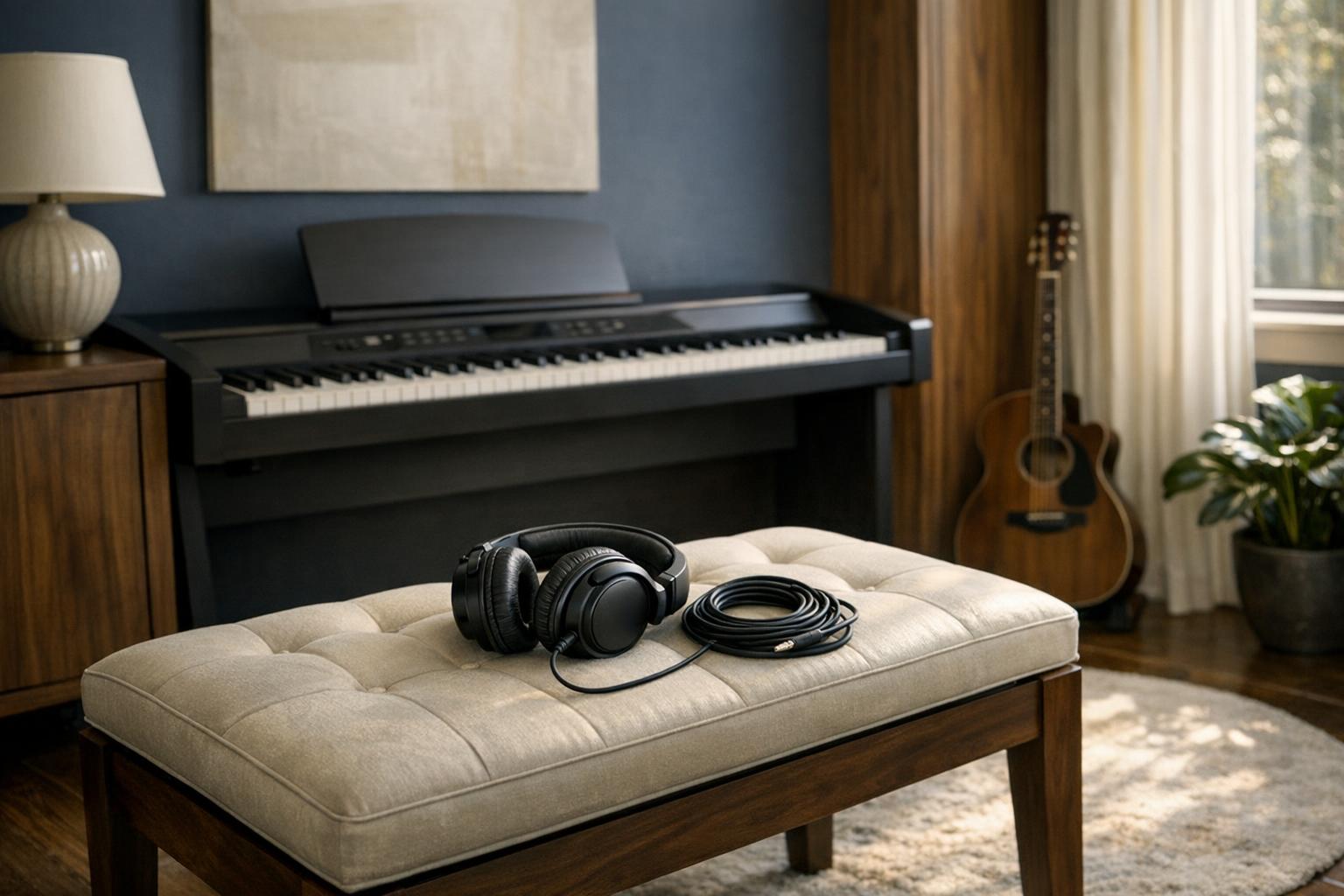
Do not equate Bluetooth with headphone support
Bluetooth wording is particularly easy to overread. A piano may support Bluetooth MIDI, Bluetooth audio input or another specific function without supporting wireless headphone output. These are different uses of the technology. Read the direction of the connection and the function named by the manufacturer. A generic wireless label is not enough evidence to claim that any wireless headphones can pair directly with the instrument.
If you intend to use an external transmitter or another device, verify the complete arrangement independently and consider the manufacturer's cautions. We do not promise that an untested wireless chain will have acceptable delay or preserve every function. A simple wired arrangement may be easier to document, but compatibility still requires the correct socket and accessory. Keep the distinction between MIDI messages and audio in your notes; sending performance data is not the same thing as sending the sound you hear from the piano.
For the next part of this decision, read Polyphony and Piano Sounds: Reading Specifications. Keep the equipment requirement separate from personal preference, and verify the exact selected model before treating related information as evidence for your own configuration.
Plan for a shared room honestly
Headphones reduce the need to use the piano's speakers, but mechanical key and pedal noise remains a separate question. Room construction, neighboring spaces and the support surface can affect what other people notice. We do not measure those effects or label an instrument apartment-safe from its listing. If the room is shared, discuss the intended use and, where possible, assess the actual setup instead of relying on a broad quiet-practice claim.
Consider cable length and routing before choosing headphones. The cable should not pull against the socket during normal movement or cross a walking route. Keep it clear of the stand mechanism and pedal area. A storage hook or nearby shelf may be useful if it is compatible with the furniture and does not load the instrument in an unsupported way. Follow the headphones' and piano's volume guidance; this site does not set a universal listening level or provide a hearing-safety guarantee.
For the next part of this decision, read Caring for and Moving a Digital Piano. Keep the equipment requirement separate from personal preference, and verify the exact selected model before treating related information as evidence for your own configuration.
Evaluate the accessory without losing the instrument
Comfort, fit and sound preference can be personal, so a specification table is not a substitute for trying headphones when possible. The piano's sound engine and headphone output also form part of the listening chain. A demonstration recorded through speakers does not establish how the instrument will sound through your chosen headphones. Compare the arrangement you will actually use and avoid turning another buyer's preference into a universal ranking.
Before ordering a piano bundle, separate the value of the instrument from the value of the included headphones. Confirm whether the accessory is identified, whether an adapter is supplied and whether you would otherwise choose the same item. If you already own suitable headphones, an unspecified bundle extra may not be a meaningful advantage. Our instrument comparisons use captured reviews and documented piano attributes, not an invented assessment of every accessory in the box. Resolve the exact connection first, then decide which additional equipment is genuinely needed for your room.
Sources and further reading
- Yamaha P225 88-Key Digital Piano with Weighted Keys, Portable Design, Keyboard, Music Rest, Sustain Foot Switch, and Built-In Speakers, Black (P225B) — exact equipment listing
- Yamaha manual library: choose the exact model; do not substitute series specifications
- Yamaha P-71 owner manual: model-specific headphones, pedals, power and care instructions; verify your own instrument manual