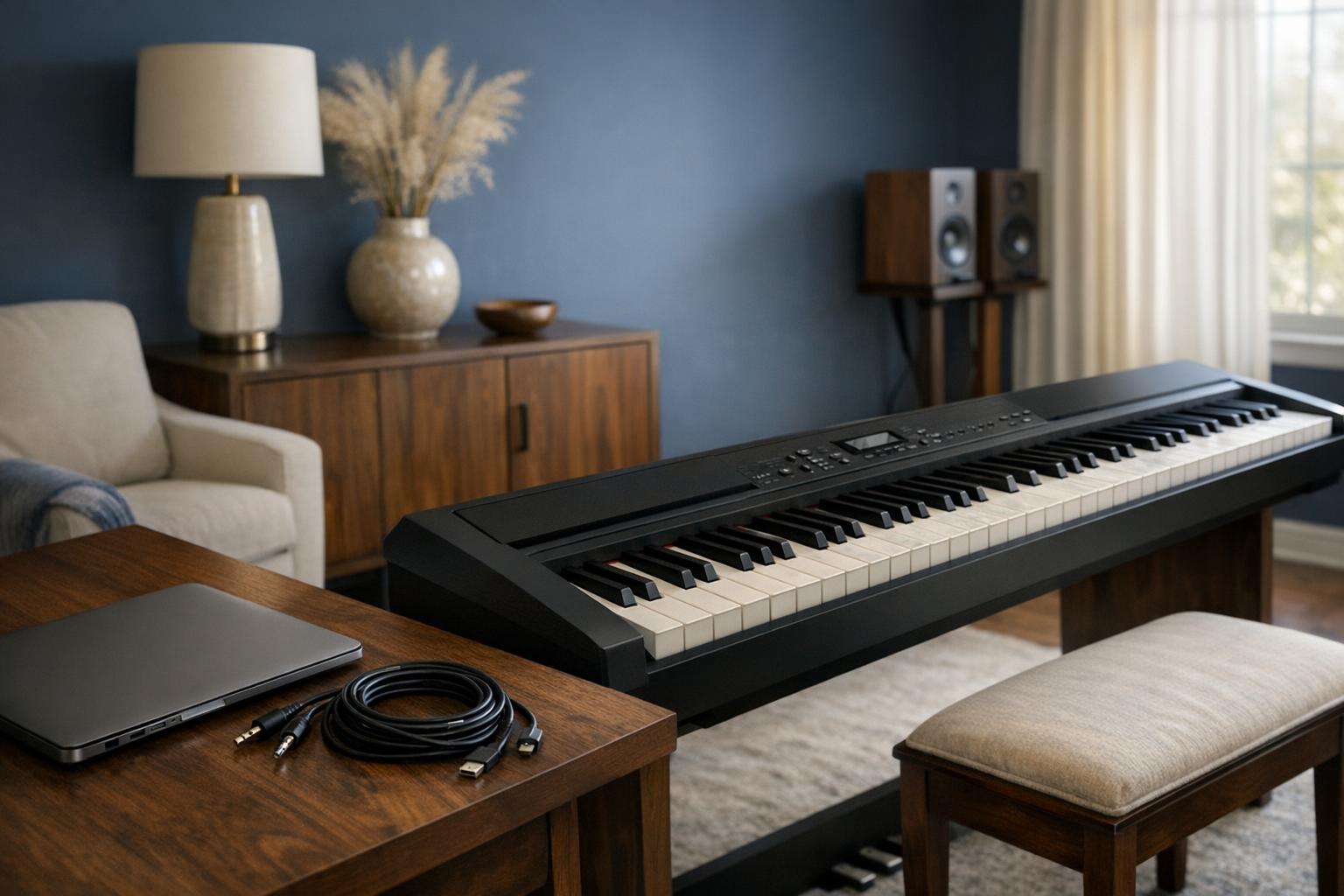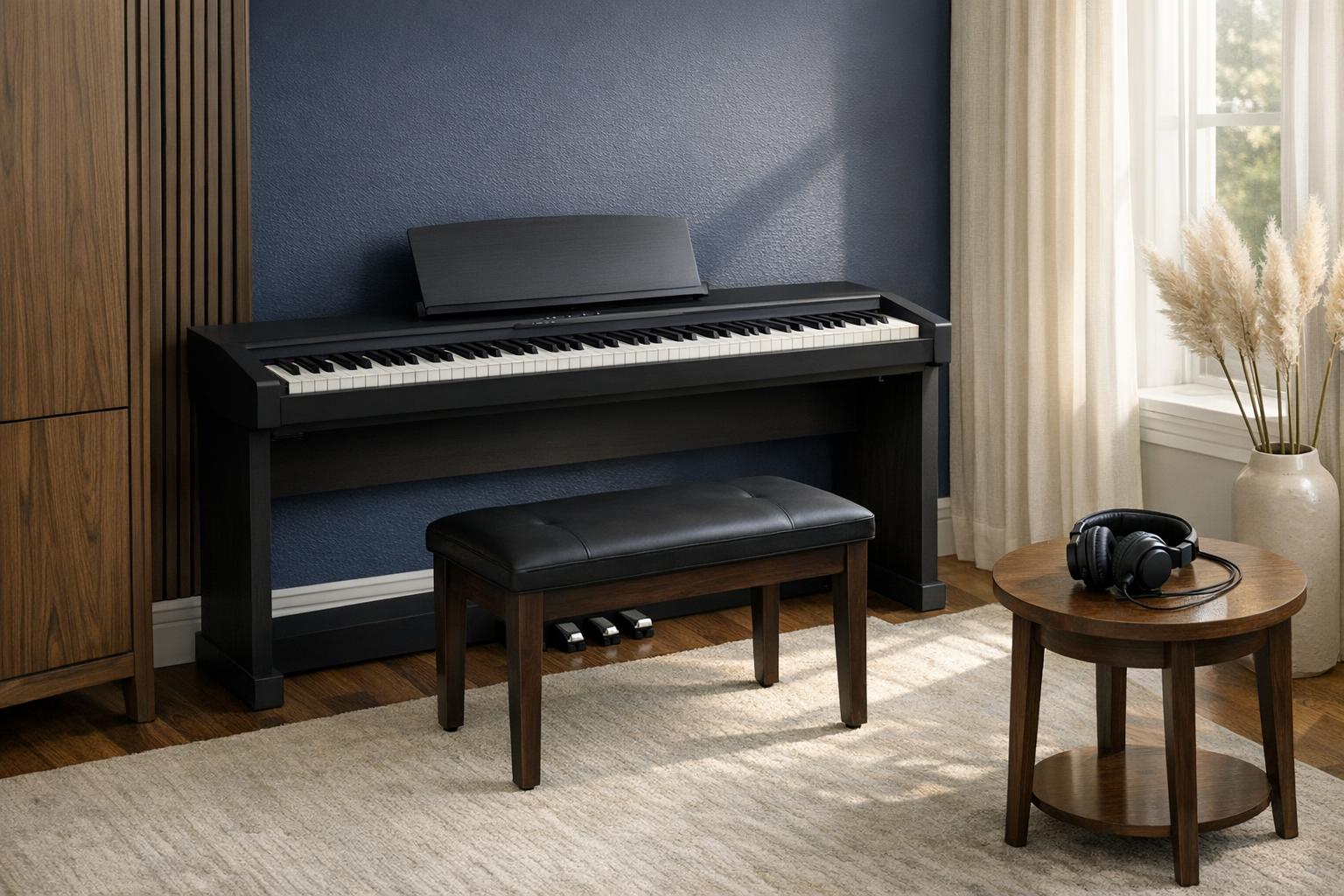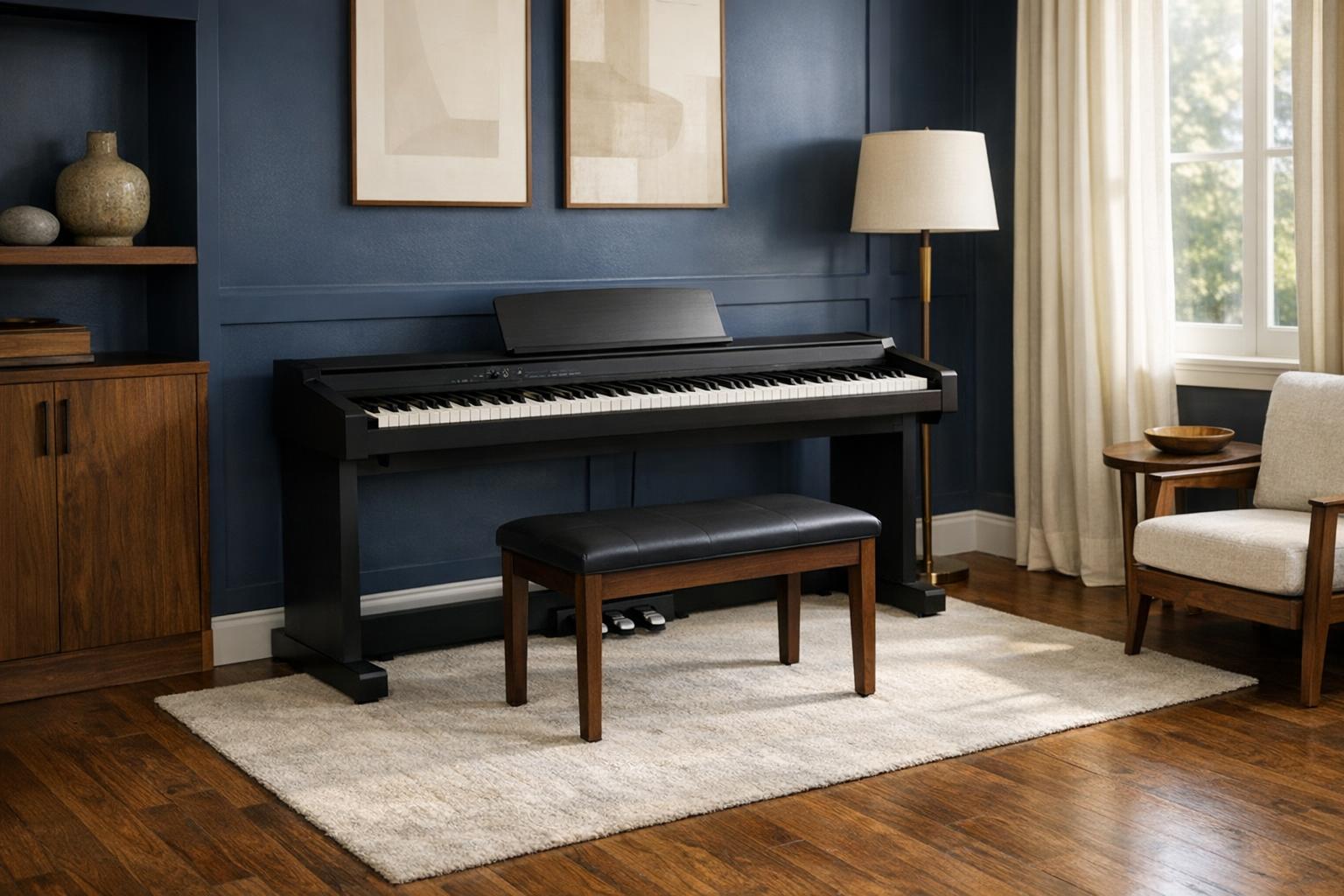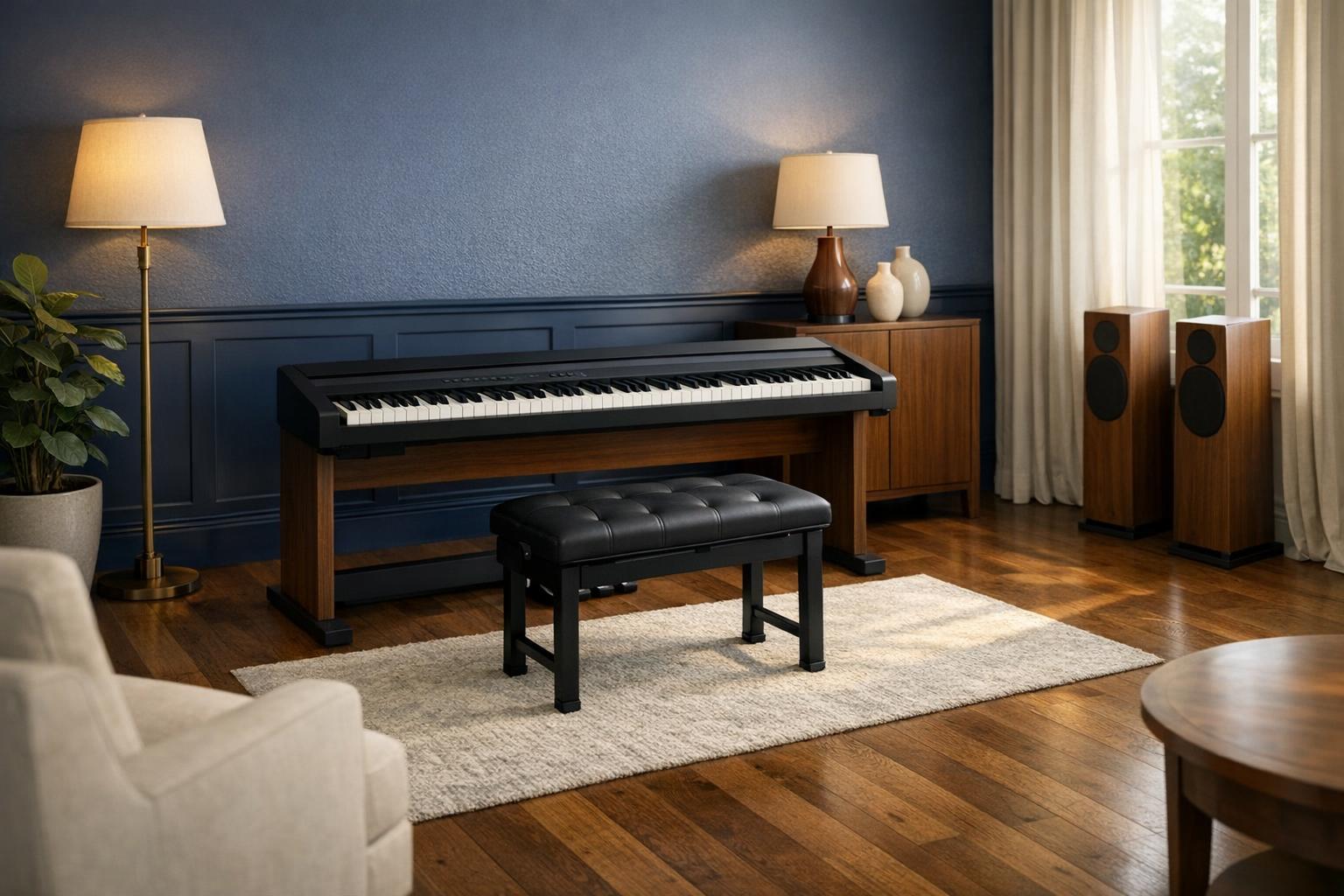
A digital piano can fit against a wall while still leaving too little room to use the bench, reach the pedals or move through the room. Planning should therefore start with the complete arrangement rather than keyboard width alone. Use the exact instrument dimensions, add the space you personally intend to reserve for the bench, and check the delivery route separately. This guide offers a measurement workflow, not a universal ergonomic prescription or a guarantee that any particular instrument will fit your home.
Measure the instrument and its surroundings separately
Find the assembled dimensions for the exact model and configuration. A portable keyboard on a separate support may occupy a different footprint from the same keyboard on a furniture stand. The music rest, cable connections and pedal assembly may extend beyond the bare case. Read how the manufacturer defines each measurement and do not substitute carton dimensions for assembled dimensions. If the listing is unclear, consult the model manual or ask the manufacturer.
Next measure the available room independently. Note doors, windows, radiators, existing furniture and walking paths. An apparently empty rectangle may be part of a door's travel or access to a cupboard. Avoid selecting an instrument by rotating its dimensions on paper without considering the actual playing direction and pedal position. Photographs can help you remember the room, but they are not reliable measuring scales. Keep a simple written record of the instrument footprint and the usable room space so that the two can be checked against each other.
For the next part of this decision, read USB, MIDI and Audio Connections on Digital Pianos. Keep the equipment requirement separate from personal preference, and verify the exact selected model before treating related information as evidence for your own configuration.
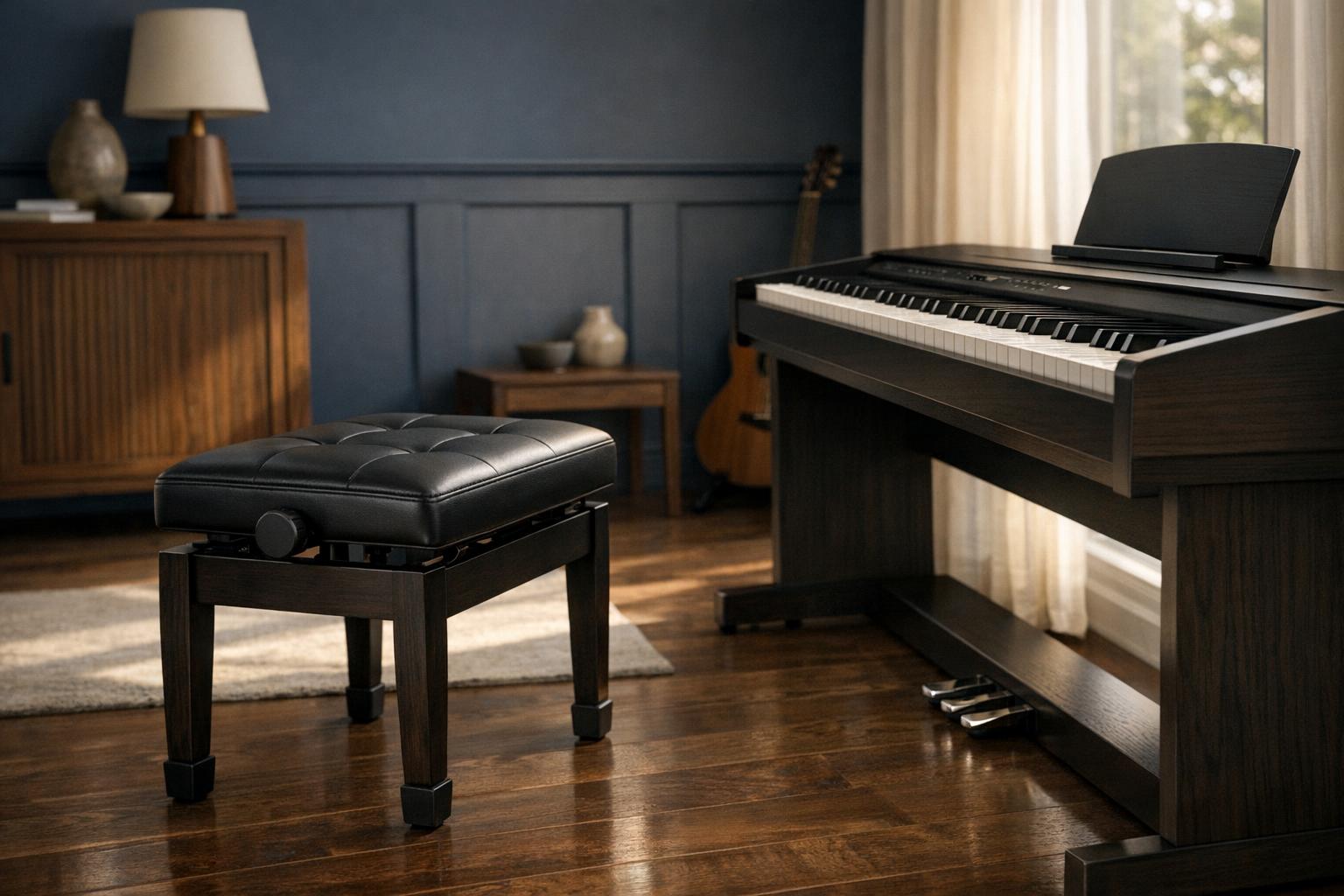
Choose your own bench allowance
The bench needs room both when in use and when moved away. That requirement varies with the player, bench design and room layout, so our planner does not impose a supposedly universal allowance. Enter the instrument width and depth in inches, then add the front-to-back space you want to reserve for the bench and movement. The result is a planning rectangle, not a certification of posture, comfort or accessibility.
The arithmetic is deliberately transparent: total depth equals instrument depth plus your bench allowance. Multiplying that total depth by instrument width gives square inches; dividing by 144 converts the area to square feet. The planner rounds the area to one decimal place. It does not add hidden margins, infer a model's dimensions or recommend a bench height. Any additional side access, rear ventilation or manufacturer-required clearance remains a separate check. A plausible area figure is useful only when the individual dimensions are also workable in the actual room.
For the next part of this decision, read Digital Piano Bundles and Accessories: What Is Included?. Keep the equipment requirement separate from personal preference, and verify the exact selected model before treating related information as evidence for your own configuration.
Check access before delivery
Measure the narrowest parts of the route from the delivery point to the intended room, including turns and stairs. Obtain carton dimensions and handling information from the seller rather than assuming that an assembled cabinet will arrive in the same shape. Some packages require assembly, but that does not establish that every part can be carried safely by one person or through every doorway. Follow the manufacturer's handling and assembly instructions and arrange suitable help where required.
Confirm what the delivery service includes. A photograph of an installed piano does not promise room placement, assembly or packaging removal. If those services matter, get the current terms for the exact offer. Consider where cartons can be opened without blocking an exit and how packaging will be retained while you check the contents. We do not provide lifting techniques or structural advice for a floor. If the location raises a genuine building or access concern, use an appropriately qualified professional rather than relying on a catalog comparison.
For the next part of this decision, read Choosing an 88-Key Digital Piano. Keep the equipment requirement separate from personal preference, and verify the exact selected model before treating related information as evidence for your own configuration.
Verify the setup as a complete system
After the physical measurements, check the support and accessories. A separate stand needs documented compatibility with the keyboard dimensions and weight; the bench must suit its intended use and assembly requirements. Pedal cables and power cables should follow the manual and avoid walking routes. Do not treat a shallow cabinet as automatically suitable for every small apartment, because the usable bench space may be the larger constraint.
Save your final measurements beside the exact product listing and compare them again before ordering. If a different color or bundle changes the selected ASIN, confirm that the dimensions and contents still match. Revisit the plan if you change the bench, support or room. Our comparisons can identify documented console and portable arrangements, but they cannot see your doorway or assess your seating position. A final measured check is therefore not an optional formality: it is the step that connects an online equipment description to the space in which you actually intend to use it.